
Summit Township Resident Lookup Records
There is no official roster of every person in Summit Township. A useful resident lookup connects a person to one narrow fact at a time, then compares that fact with an independent record. The Jackson County GIS Parcel Viewer can show an owner field, parcel identification number, property address, government unit, legal description, and an owner mailing field. Those are property facts, not a declaration that the owner lives there. The Summit Township BS&A portal is a second property and assessment route, searchable by address, name, or parcel number. Confirm that both routes point to the same parcel and that its government unit is Summit Township before using the result as an anchor.
| Record | What It Can Confirm | Custodian or Tool | Access Route |
|---|---|---|---|
| Parcel and assessment record | Ownership role, situs address, PIN, legal description, government unit | Jackson County GIS and Summit Township BS&A | Public web search, then township or county confirmation |
| Voter record route | Registration status and local-clerk information, subject to redaction | Michigan Voter Information Center and QVF request process | Online status tool or written geographic request |
| Court index | Party appearance, case number, docket history, and public case information | MiCOURT and the correct Jackson court clerk | Online index, court file, or copy request |
| Vital index or certificate | A family event when the law permits access to the relevant record | Michigan MDHHS, GENDIS, library, or archives | Index search, state order channels, or historical collections |
| Professional license | Credential status, profession, issue or expiration information | Michigan LARA MiPLUS | Free status check or paid certified verification |
Begin with the record closest to the known fact. A known street can lead to GIS and a PIN. A case number belongs in MiCOURT, not a property tool. A family event may call for GENDIS or the state vital-record process. A professional credential belongs in MiPLUS. CountyFusion can extend a parcel trail through grantor and grantee names, while a court result can send a requester to a clerk. Neither a deed party nor a court party should be relabeled as a current resident without another record.
Summit Township Resident Record Anchor
Use a full name plus one other non-sensitive anchor before comparing records. A middle initial, a known road, an approximate year, a parcel PIN, or the time period of an old directory can separate same-name results. Keep spelling variants, suffixes, and maiden or married names together in the research notes. The GIS viewer deliberately separates O_ADDRESS, the owner mailing address, from P_FULLADD, the property or situs address. A mailing address is not proof of where someone lives, and a property owner may have no connection to present occupancy.
Record the source date, access date, jurisdiction, and whether a result was an index hit, a record image, or a custodian-confirmed copy. This is especially important near the City of Jackson boundary, where a Jackson mailing label can coexist with a Summit Township parcel. A historical directory, obituary, deed, license, or case search can add context. It cannot replace the second independent record needed for a reliable identification.
Summit Township MiCOURT Resident Records
MiCOURT Case Search is a party and case index, not a residency database. It accepts a participant name or case number and supports category, type, subcategory, year, status, date, jurist, and public-status filters. Where permitted, documented qualifiers also include date of birth and driver license information. Civil, traffic, criminal, domestic, and probate categories have different subcategories, so a searcher should note the category and public-status setting rather than treating all name hits as alike.
The MiCOURT search screen is the proper first stop for a case number, a party name variant, or a dated court question.
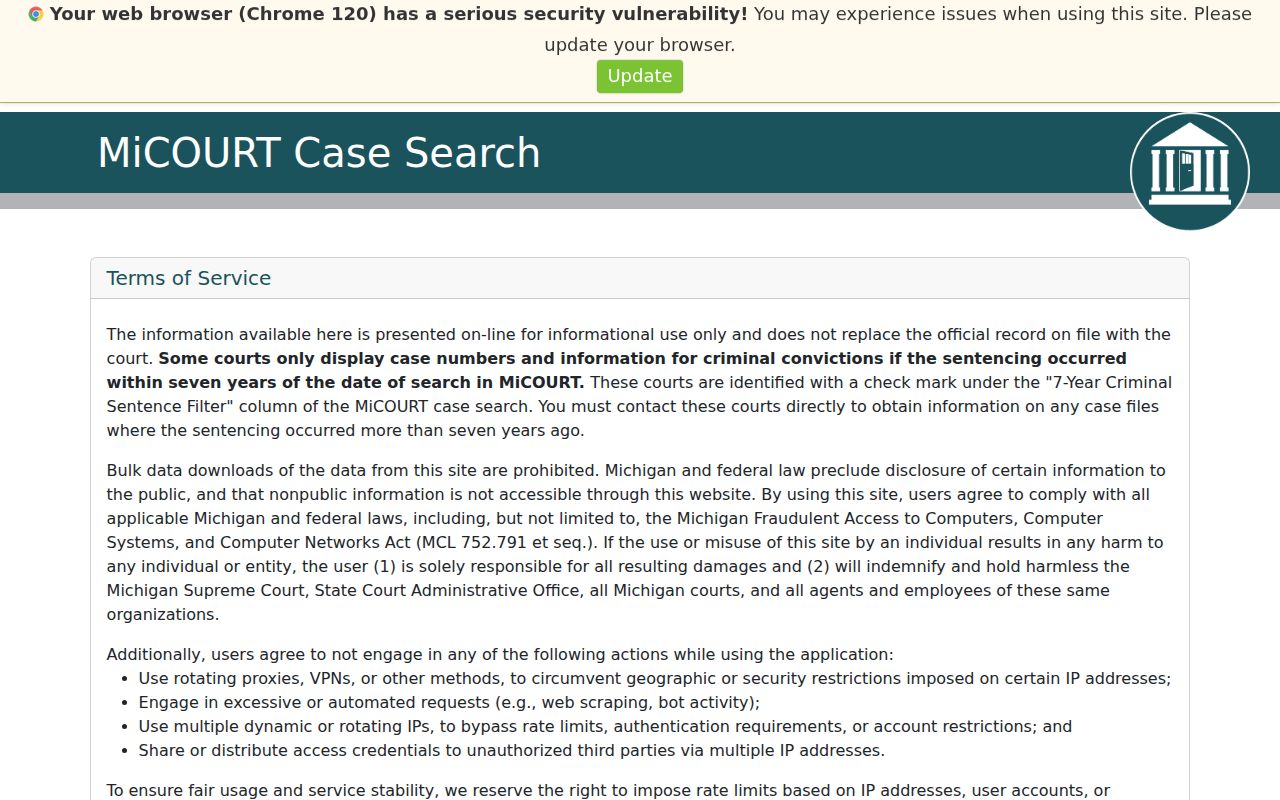
Its filters help narrow a case inquiry, but a match still needs the court, case number, date, and party role checked against an independent identifier.
MiCOURT excludes nonpublic and sealed matters. For some courts, criminal conviction display can be limited to matters with sentencing in the preceding seven years. The court standards also limit internet document images, so an online result normally does not supply the complete file. A current or older record question belongs with the court that holds the official file.
Summit Township Resident Court Files
The public display is useful as a schema for reading a court result. It may show Party Name, Time, Room, and Case Number, all of which describe a docket display rather than a person’s current circumstances. A docket is the court’s running list of filings and events in a case. An index points to a record; an image is the scanned record itself; a certified copy is a copy authenticated by the custodian when that form is required.
- Party Name: the named person or organization appearing in the case display.
- Case Number: the identifier needed to ask the correct court for a record.
- Time and Room: scheduling fields that may appear on the public display.
- Docket history: public case events, distinct from document images and the complete court file.
The official MiCOURT Court Display sample illustrates those visible docket fields without establishing any fact about a particular Summit Township resident.
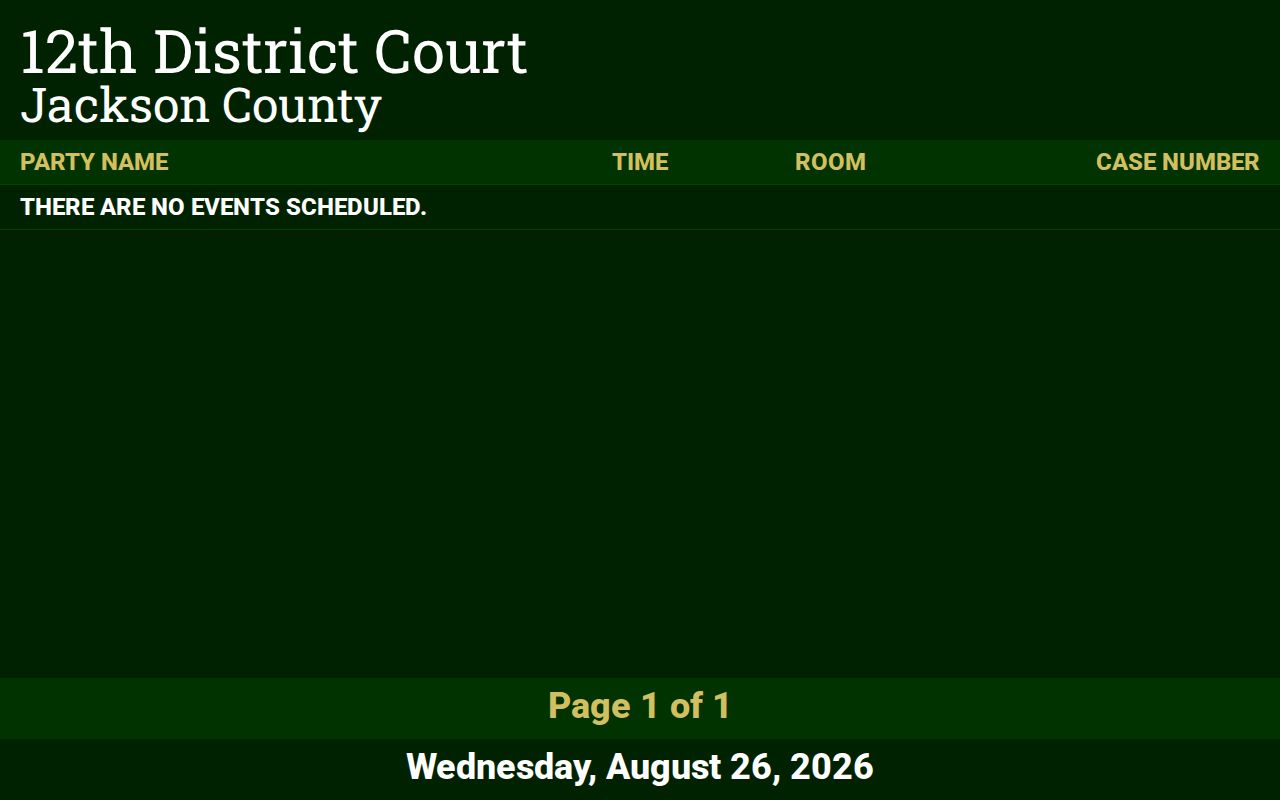
Use the fields to capture a case number and then request the underlying material from the responsible court, rather than relying on a screen capture alone.
For circuit files, the Jackson County 4th Circuit Court directory identifies the County Clerk as the official-file custodian at 312 S Jackson Street, with 517-788-4450 listed for the courthouse. For a district request, the 12th District Court request form asks for the case name and number and allows a register of actions, file review, copies, judgments, service, satisfaction, or a certified copy. The form lists $2 per page, an added $10 certification charge, and $5 for mail, email, or fax; it states two-business-day handling. Older general civil files over 10 years and small-claims files over six years can be on microfilm or have limited availability.
Confirming a Summit Township Resident Match
Verification works best as a short chain. The goal is not to collect every mention of a name. It is to see whether two properly limited records agree on the same person, place, or time. Start with the fact already known and avoid guessing at protected fields. When a parcel is involved, match its PIN, legal description, situs address, and government unit. When a court case is involved, match the court, case number, date, and role. A mismatch should remain a mismatch, not a reason to force records together.
- Write the full name, one second anchor, and the relevant time period. Preserve alternate spellings instead of merging them.
- Search the GIS viewer by address, owner, or PIN and compare the result with BS&A. Confirm that
GOVUNITidentifies Summit Township. - Run MiCOURT only when a name or case question remains, then record the case number, court, public status, date, and party role.
- Use an index, certificate process, library source, or custodian request that fits the remaining question. Confirm the likely match with that independent record.
- Docket
- The dated sequence of events and filings recorded for one court case.
- Index and image
- An index locates a record. An image is the scanned document or display, and may be unavailable online or redacted.
- Certified copy
- A custodian-issued copy carrying the authentication required for an official purpose.
County or state records can be requested in person, by phone, through their portal, or by the form the custodian specifies. For an existing Jackson County record that is not online, the county FOIA route accepts online, email, mail, fax, in-person, or written requests. It cannot require an agency to create a new resident list from unrelated systems. Describe the existing record, date range, office, and requested format as narrowly as possible.
Summit Township Vital Resident Records
Vital records answer event questions, not broad name-search questions. Michigan records events filed since 1867. The state vital-record order page lists mail, authorized VitalChek ordering, phone, drop box, appointment, and Will Call as access channels. Birth records more than 100 years old are open to any person, while MCL 333.2882 limits access to births under 100 years. Death, marriage, and divorce certificates follow the state’s written request and prepayment process. For older holdings, the transfer rules in MCL 333.2885 can send qualifying records to the Library of Michigan, but that does not mean each file is online.
The Michigan vital-record ordering route shows the official choices for an eligible request.
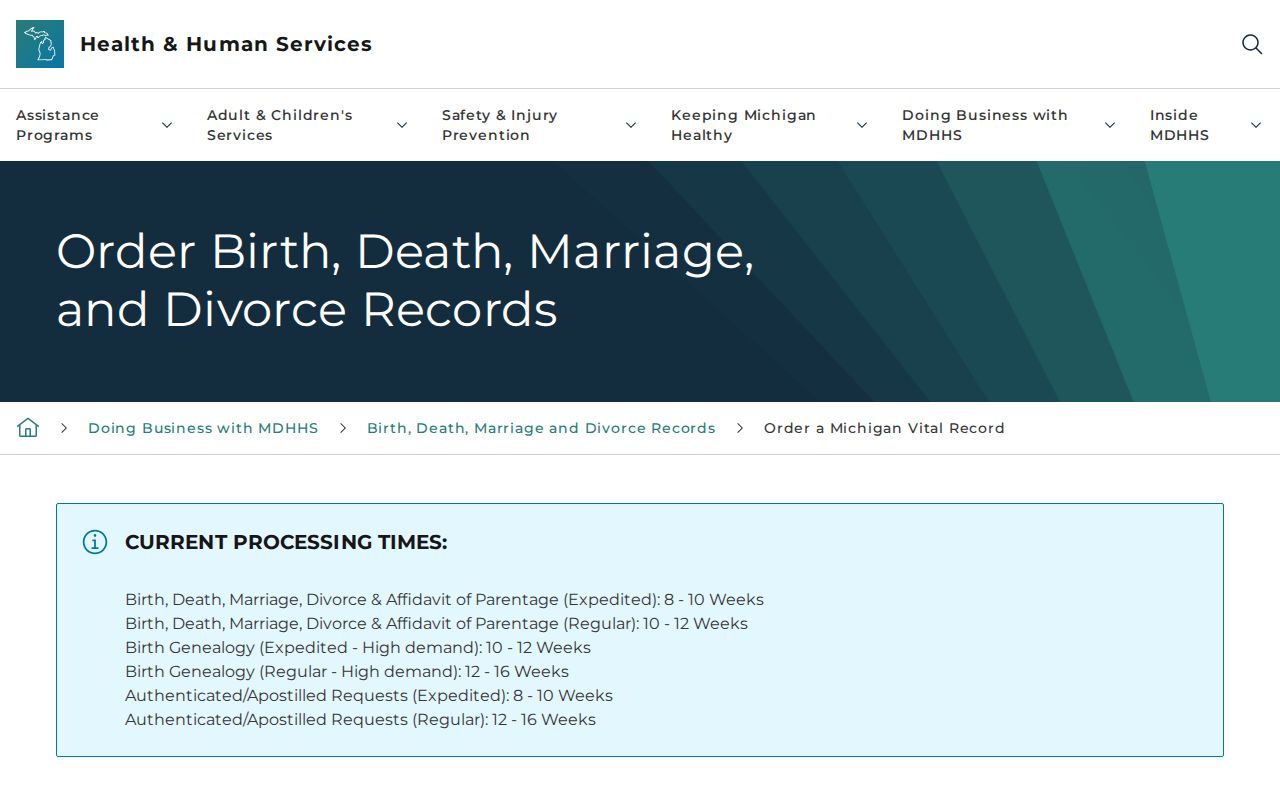
The right channel depends on the record type and eligibility, so check the live state form before sending payment or identity documents.
For early death research, GENDIS covers deaths from 1867 through 1897. It searches a decedent surname or name, father surname, and death year; a partial surname may use an asterisk, and results stop after 200. Treat a GENDIS result as a candidate. It needs a certificate, library, archival, or other independent record before it identifies a person with confidence.
Summit Township Voter Resident Records
The Michigan Voter Information Center provides a state route for registration status, address, and local-clerk information, subject to statutory limits. The interactive field display was not captured during research, so it is best used as the current official tool rather than described as a fixed screen. A written QVF request offers geographic delivery choices. The public file has redactions: protected identity information, month and day of birth, phone number, email, signature, and other protected fields are not part of a casual neighborhood or name search. A voting record is also not an invitation to reconstruct what the law keeps private.
The MVIC lookup is an official status and local-clerk entry point for a Summit Township resident lookup.
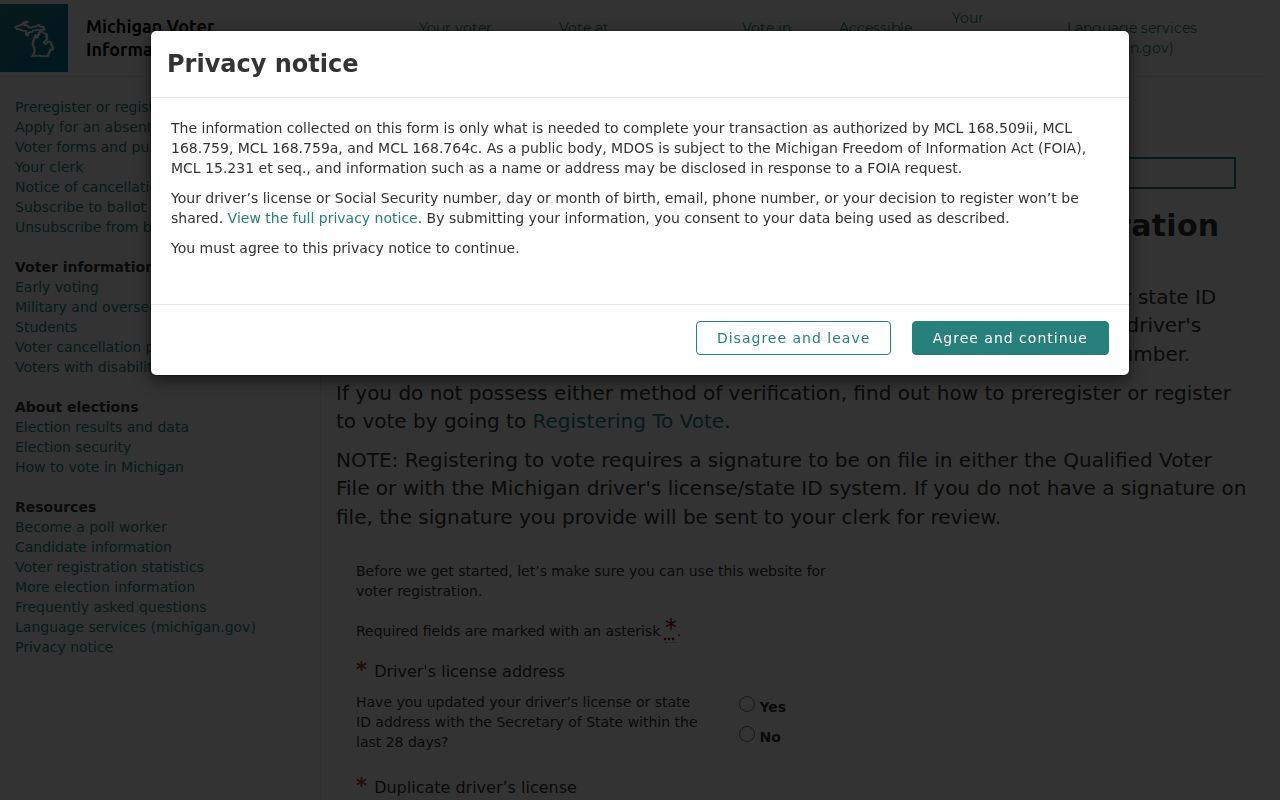
Use its current response and the local clerk route as status information, then preserve the date checked rather than assuming an old result remains current.
When a professional credential is the actual question, use Michigan LARA MiPLUS. It can show a name, profession, status, expiration, address, issue date, specialties, and discipline where available. A license address is still a record field, not a guaranteed current location. Free status information is available, while a LARA certified verification is listed at $15 per license. Keep the profession, license number, status, and source date with the result.
Summit Township Historical Resident Records
When the question is historical, change sources instead of asking a current portal to do archival work. The Jackson District Library Local History Archive provides local photos, documents, maps, publications, Citizen Patriot full text, and the Jackson County Obituary Index. Library databases may need a card or in-library access, and JDL reference staff can help with a specific historical name or address. Preserve the printed place label because an older item may say Jackson, Vandercook Lake, Summit, or a road/community label for a parcel now associated with Summit Township.
For deeper time periods, use the Library of Michigan, Archives of Michigan, FamilySearch, and the Jackson County Genealogical Society as discovery routes, then verify with the primary custodian. An obituary or directory can show a date and association. It does not prove current residence. The historical directory collections are the natural next source when a name needs a year-by-year address trail.
Note: Record the original spelling, place label, year, and repository before comparing historical evidence with a modern parcel or court result.
Summit Township Resident Record Limits
Michigan access rules set boundaries even when a name appears in more than one official system. Sealed and nonpublic court matters stay out of the public search. Vital-record eligibility controls access to restricted birth records. The driver and vehicle record rules are not a general resident lookup. Michigan’s Address Confidentiality Program, created by Act 301 of 2020 and codified at MCL 780.851 through 780.873, provides a designated substitute address and mail forwarding for qualifying people at risk. Do not try to piece together a protected address, date of birth, phone number, email address, signature, or other redacted field from separate sources.
Lawful use. Keep a Summit Township resident lookup limited to a specific, lawful purpose. Using records to stalk, harass, intimidate, or harm a person is prohibited and can violate Michigan law.
Ask the record custodian for a correction, an exemption explanation, or a redacted copy when appropriate. The Michigan Attorney General ACP page directs people seeking address protection to an application assistant. For an existing county-held record, request only the releasable portion and preserve the custodian’s response. Purpose-specific research stops once the particular fact is verified.